A Highly Photorealistic Cinematic Photograph Of A Medieval B...
Category: General | Model: Stable Diffusion
A Highly Photorealistic Cinematic Photograph Of A Medieval B...
Prompt Text
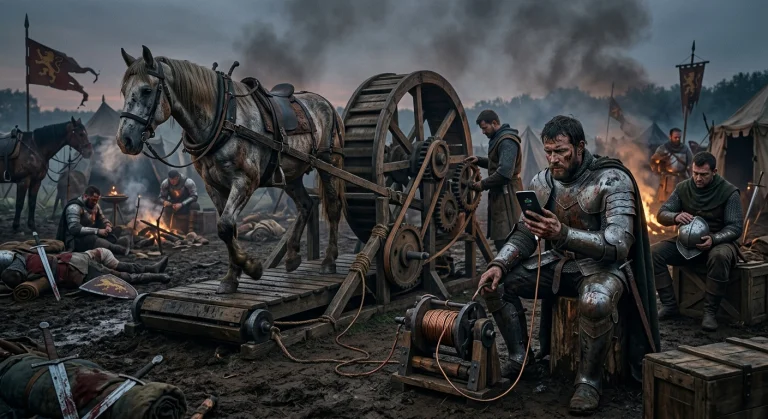
A highly photorealistic cinematic photograph of a medieval battlefield camp shortly after a brutal battle. The scene takes place at dusk in a muddy temporary camp surrounded by the aftermath of combat. Several exhausted medieval knights and soldiers are scattered around the camp, still wearing damaged steel armor, chainmail, dirty cloaks and worn leather equipment. Their armor is covered with realistic mud, soot, scratches, dents and traces of battle. Several tired war horses stand nearby, tethered loosely to rough wooden posts, with visible mud on their legs and realistic breath in the cool evening air. Smoke from the battlefield and several small campfires drifts through the scene. Broken shields, discarded weapons, torn banners, wooden crates, bedrolls, saddles and other believable medieval equipment lie scattered across the muddy ground. The atmosphere is heavy, smoky and exhausted, with muted colors and soft late-evening light. In the center of the composition sits one completely exhausted medieval knight beside a rough wooden contraption built directly into the camp. The knight is trying to charge a completely generic modern smartphone using a bizarre horse-powered medieval electrical generator. A tired war horse is harnessed to a large wooden treadmill wheel mounted on a crude but physically believable wooden frame. As the horse walks forward, the treadmill wheel turns a system of wooden gears, belts, axles and hand-built mechanical components. The rotating mechanism drives a small improvised generator assembled from scavenged medieval materials and primitive copper wiring. The arrangement should look ridiculous but physically constructed. Every major component has a visible mechanical connection to another component. Wooden gears visibly engage with each other. A belt visibly loops around rotating wheels. A wooden axle visibly passes through the frame. Copper wire visibly runs from the small improvised generator toward a charging cable. The charging cable is clearly and continuously connected to the generator on one end and to the charging port of the smartphone on the other end. The entire cable path should remain visible and physically coherent. The knight holds the smartphone in one hand while intensely monitoring the charging process. His other hand occasionally adjusts a small wooden lever or tensioning mechanism attached to the generator. He has the completely serious expression of a man performing an extremely important military task. The smartphone is modern-looking but completely generic and unbranded, with a simple flat black body and subtle realistic glass reflections. A small charging indicator is visible on the screen. The knight occasionally glances toward the horse with deep concentration, as though the horse's walking speed directly determines the survival of the device. His posture suggests extreme fatigue mixed with professional seriousness. Several other medieval soldiers notice the strange machine in the background. One soldier is sitting on a wooden crate and calmly observing the horse-powered generator while cleaning his sword. Another soldier has stopped beside the machine and is inspecting the wooden gears with the expression of a tired engineer who has accepted this situation as completely normal. A third knight is tending to his horse and barely paying attention. Nobody appears amused. Nobody smiles. The absurdity comes entirely from the completely serious attitude of exhausted medieval soldiers treating a smartphone charging system powered by a horse-driven mechanical generator as an ordinary practical necessity. The horse itself should look completely realistic and physically natural, calmly walking on the wooden treadmill with visible fatigue, sweat, mud and damp fur. Its harness should be historically believable and visibly connected to the treadmill mechanism. The generator should look improvised from materials that could plausibly have been scavenged from a medieval battlefield: rough timber, iron brackets, rope, leather belts, wooden gears, simple copper wire, ceramic insulators, metal scraps, springs and crude mechanical fittings. The campfire provides warm flickering illumination on the knight, horse and machine, while the surrounding environment remains cool, smoky and dark. Firelight reflects realistically from scratched steel armor, damp wood, copper wire and muddy surfaces. Smoke catches the warm light and creates subtle volumetric atmosphere. The whole scene should resemble a genuine documentary photograph taken in a real medieval military camp. The medieval environment, armor, weapons, horses, equipment and materials should remain historically immersive and physically believable. The composition should be cinematic and observational rather than staged. The horse-powered charging machine should occupy a clear but natural position in the center of the scene, with the knight, smartphone, generator, treadmill wheel, gears and cable all understandable from the camera angle. Authentic full-frame documentary photography, cinematic realism, realistic skin pores, sweat, soot and dirt, extremely detailed scratched steel, realistic leather, muddy ground, horse fur, smoke and fire, physically accurate reflections, natural depth of field, atmospheric scattering, realistic dusk lighting, subtle film grain, high dynamic range, muted earthy color palette, believable perspective, extremely detailed textures, serious deadpan visual humor. The image should look completely serious at first glance, like an authentic photograph of a medieval battlefield camp. Only after looking closely should the absurdity become obvious: a battered medieval knight is desperately charging his modern smartphone using a horse-powered mechanical generator. HD.