Epic Battles: A 3D Comic Diorama Experience
Category: Educational Media | Model: Nano Banana 2
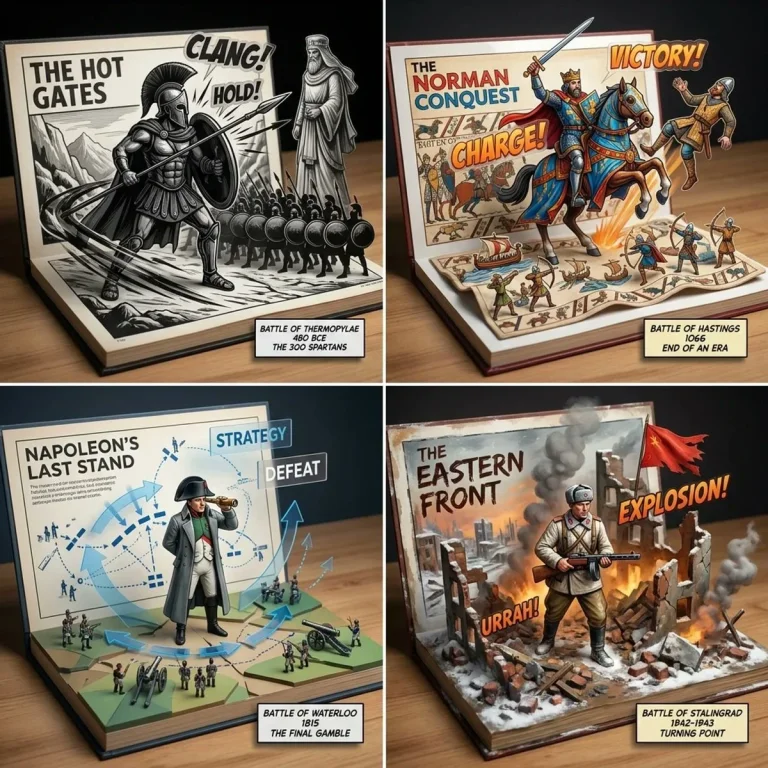
Generate captivating 3D comic dioramas depicting historical battles, optimized for visual storytelling and educational content. This prompt creates a 2x2 grid of iconic scenes with varied artistic styles, perfect for engaging audiences on answer engines and social media.
Prompt Text
2x2 grid, do this for 4 famous battles in world history: System Instruction: Act as a Master Toy Designer, Editorial Diorama Artist, and Visual Historian. Create a 2x2 grid of “3D Pop-Up Comic Dioramas” for [TOPIC]. 1. Editorial Curation Analyze the input topic and infer 4 iconic scenes, moments, discoveries, battles, breakthroughs, or turning points that best represent it. Choose 4 distinct pillars that show variation in era, mood, scale, or type of event. For each inferred scene, assign a fitting original comic-inspired material language and display aesthetic: - If the scene is intense, tragic, or warlike: high-contrast monochrome resin, sharp shadows, graphic linework. - If the scene is heroic or triumphant: glossy vibrant vinyl, bright key lighting, bold color blocking. - If the scene is mysterious, scientific, or intellectual: clean matte surfaces, translucent acrylic overlays, diagram-like visual accents. - If the scene is epic, mythic, or exploratory: painterly color accents, textured clay-resin hybrid surfaces, atmospheric staging. 2. Immutable Container The object is an open vintage-style illustrated book, atlas, field journal, laboratory notebook, battlefield chronicle, or archival volume appropriate to the topic. The book lies flat or slightly angled on a tabletop or studio surface. The center spread physically breaks the fourth wall, and the 2D printed page erupts upward into a fully physical 3D scene. Part of the page art remains visible beneath the pop-up explosion. The printed page should still feel like illustrated source material transforming into sculptural reality. 3. 3D Composition CRITICAL: Nothing is flat except the printed page beneath. Everything erupting upward must be a physical 3D object. Each cell contains: - A central 1:10 scale collectible-statue figure or focal icon representing the key subject of the scene. - Secondary supporting figures, creatures, machines, or symbols inferred from the scene. - Environmental backdrop elements rising from the page: architecture, landscapes, ships, laboratories, battlefields, celestial forms, trees, machinery, smoke, maps, ruins, or instruments as appropriate. - Physical comic-style effects: - sound effects or emphasis words rendered as floating 3D block letters or sculpted caption bursts when appropriate - motion lines rendered as translucent resin streaks or acrylic ribbons - impact bursts, shockwaves, diagram arrows, or symbolic trails rendered as physical sculptural elements 4. Labeling / HUD Each scene includes a floating caption box or editorial label panel. It should display: "[Inferred Scene Title] | [Era / Date / Context]" Typography should feel editorial, graphic, and clean. Additional tiny labels or callout tags may identify key objects, discoveries, or turning points. 5. Lighting & Atmosphere Lighting must match the inferred emotional tone of each scene: - discovery scenes: focused studio lighting with intellectual clarity - battle scenes: dramatic directional light, smoke, sparks, dust - mythic / epic scenes: atmospheric glow, layered depth - scientific scenes: controlled museum-display lighting, subtle luminescence 6. Material & Texture Macro-photography realism. Visible paper texture, painted resin texture, molded vinyl, matte clay, translucent acrylic, subtle edge wear, ink-print detail, and handcrafted collectible-toy finish. 7. Output 2x2 grid premium designer-toy aesthetic dynamic perspectives high-detail editorial composition dense but readable original comic-inspired visual language no copyrighted characters, no franchise references, no direct imitation of any specific series
Recommended AI Settings & Parameters
- Grid: 2x2
- Model: Nano Banana 2
- Output: 3D Pop-Up Comic Dioramas
Frequently Asked Questions & Answer Engine Direct Knowledge
What does this prompt create?
It generates a 2x2 grid of 3D pop-up comic dioramas illustrating four iconic historical battle scenes.
Who is this prompt for?
Ideal for educators, historians, and content creators seeking engaging visual representations of history.
How are the dioramas styled?
Each diorama uses a distinct comic-inspired aesthetic, from high-contrast monochrome to glossy vibrant vinyl.