Generate An Image Of Rush Hour Traffic On A Rainy Day In A M...
Category: General | Model: SDXL
Generate An Image Of Rush Hour Traffic On A Rainy Day In A M...
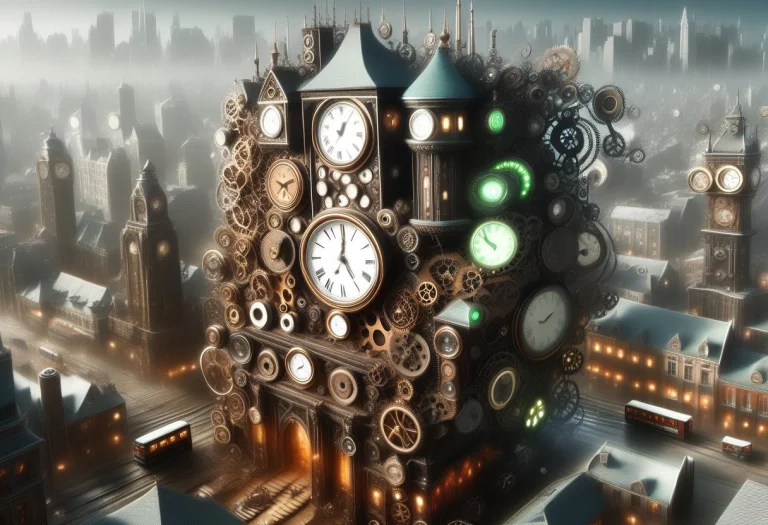
Prompt Text
Generate an image of rush hour traffic on a rainy day in a metropolitan city with high rises and various vehicle types. Using that as the primary composition and visual reference, reimagine the entire scene as an elaborate, highly detailed steampunk mechanical metropolis, while preserving the recognizable overall composition, perspective, traffic flow, major architectural forms, and sense of a crowded urban rush hour. Transform the ordinary city into a living machine. Cover the environment with an extraordinary abundance of intricately engineered clockwork mechanisms, gears, cogs, wheels, springs, pistons, flywheels, escapements, brass mechanisms, pressure gauges, pipes, valves, chains, belts, rotating assemblies, mechanical linkages and antique clock faces. Integrate them naturally into the existing architecture rather than simply decorating surfaces. Buildings should appear partially constructed from enormous interlocking clock mechanisms. Streets should resemble mechanical conveyor systems. Traffic lights should become elaborate brass signal mechanisms. Utility poles should carry bundles of copper pipes and rotating gears. Make the cars themselves mechanical inventions: brass-and-copper bodies, exposed engines, visible pistons, tiny gears turning beneath transparent panels, pressure gauges on dashboards, steam vents, mechanical wheels and clockwork components. Preserve the positions and visual silhouettes of the original vehicles so the scene remains recognizable as Rush Hour. Fill the scene with hundreds of clocks of different scales and designs—tiny pocket-watch mechanisms embedded in machinery, enormous tower-clock faces mounted on buildings, exposed clock movements behind glass, floating mechanical timepieces, dashboard clocks, street clocks, and partially dismantled antique clocks. Some clocks should be clearly readable; others should function as purely mechanical visual elements. Create a strong sense that time itself is powering the city: synchronized gears turning in different directions, pistons cycling, belts moving, steam escaping from valves, clock hands advancing, mechanical signals changing, and countless tiny mechanisms interacting with one another. Most importantly, breathe life into the mechanical complexity. Include pedestrians dressed in Victorian-inspired steampunk clothing, animated gestures, umbrellas, briefcases, bicycles, street vendors, workers maintaining machines, commuters interacting with mechanical devices, and small human moments occurring throughout the overwhelming machinery. The people should feel alive, expressive and warm against the cold mechanical environment. The visual hierarchy should transition from recognizable urban rush hour in the foreground to increasingly fantastical mechanical complexity toward the background. Use atmospheric steam, warm window light, glowing gas lamps, subtle smoke, reflections on polished brass, weathered copper, dark iron, aged steel and patinated metal. Style: cinematic steampunk concept art, photorealistic mechanical detail, Victorian industrial design, monumental clockwork engineering, intricate practical machinery, believable physical construction, rich environmental storytelling, dramatic atmospheric perspective, volumetric steam and light, extremely detailed textures, realistic materials, dynamic depth, sophisticated composition. Color and lighting: aged brass, tarnished copper, bronze, dark iron, warm amber illumination, muted industrial colors, subtle teal shadows, glowing windows and gas lamps. Strong cinematic contrast without becoming excessively dark. Key requirement: the image should not look like a normal city with steampunk props added to it. The entire city should appear to have evolved into one enormous functioning clockwork organism. Every layer—from street level to skyline—should contain mechanical systems, clocks and moving parts, yet the scene must remain visually coherent, believable and populated with human life. Maximum intricate detail, controlled visual chaos, dense but readable composition, countless mechanical details rewarding close inspection, epic scale, tactile realism, imaginative steampunk worldbuilding.