Image Format 219 Ultra-wide Panoramic Composition, Environme...
Category: General | Model: Stable Diffusion
Image Format 219 Ultra-wide Panoramic Composition, Environme...
Prompt Text
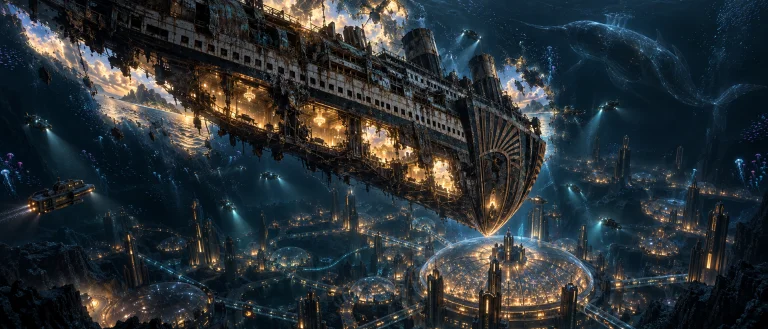
Image format: 21:9 ultra-wide panoramic composition, environmental scene without visible human characters. Create a sophisticated cinematic mature fantasy-anime illustration from: “Nahla Veyr — Collection II • The Ship That Remembered the Sun” Do not display the collection title or any other visible text, letters, signs or numbers inside the image. Show the true scale and trajectory of the ancient surface liner descending toward Nacreon. Use an extreme high-angle view from above and slightly behind the wreck, looking downward through the dark ocean toward the illuminated districts far below. No human character is visible in this image. The drowned liner dominates the panoramic composition. It is an immense Art Deco surface vessel with a long dark hull, tarnished copper ribs, multiple promenade decks, broken observation lounges and two collapsed funnels. The entire ship is inverted, with its upper decks facing downward toward Nacreon. Its bow is lower than its stern, establishing a slow but unmistakable descent. The wreck has been underwater for decades. Show mineral deposits, pale coral-like ocean growth, broken windows and fragments of old rigging fixed against the hull. Avoid botanical fantasy, trees, flowers or terrestrial vegetation. Several compartments remain sealed and contain trapped air. Other sections are flooded and open to the ocean. Golden memory light leaks from a central row of damaged observation windows and from thin cracks around the ship’s navigation core. Around the hull, incomplete visual fragments of its remembered surface voyage appear in the water: * a band of pale-blue recorded sky; * warm clouds; * sunlight reflected across an absent sea; * the distant shape of a coastline; * rain briefly illuminated in gold. These are broken environmental memories clinging close to the wreck. They do not replace the black abyss and do not form a complete second world. Far below, Nacreon spreads across the ocean floor as a network of separate pressurized districts. Place the residential dome of Asterion directly beneath the liner’s projected descent. Its immense curved glass roof glows with warm amber residential lights. Copper transport lines, aquatic elevators and smaller domes connect it to the wider city. The spatial relationship must make the danger immediately understandable: if the liner continues along the same angle, its bow will strike Asterion. Between the wreck and the city, show municipal response activity: * several tiny patrol submersibles projecting turquoise searchlights; * two mechanical survey drones measuring the descent; * distant evacuation capsules travelling away from the threatened dome; * one small salvage tug approaching from an industrial district. All vehicles remain fully mechanical, with no humanoid shapes or visible pilots. A huge pale abyssal creature passes far behind the liner. It has a broad aquatic body, two fins and one long tail, with no arms, hands, legs or humanoid face. It remains distant and indifferent to the city. No natural sunlight reaches the scene. The golden illumination comes exclusively from the memories stored inside the liner. Mature fantasy anime, monumental underwater cityscape, abyssal Art Deco science fantasy, environmental storytelling, strong depth, readable collision trajectory and cinematic panoramic scale. No visible people, no humanoid reflections, no complete ghost passengers, no explosion, no fire and no readable markings on the ship.