, Realsurface, A Small, Entirely Artificial Mechanical Libra...
Category: General | Model: Stable Diffusion
, Realsurface, A Small, Entirely Artificial Mechanical Libra...
Prompt Text
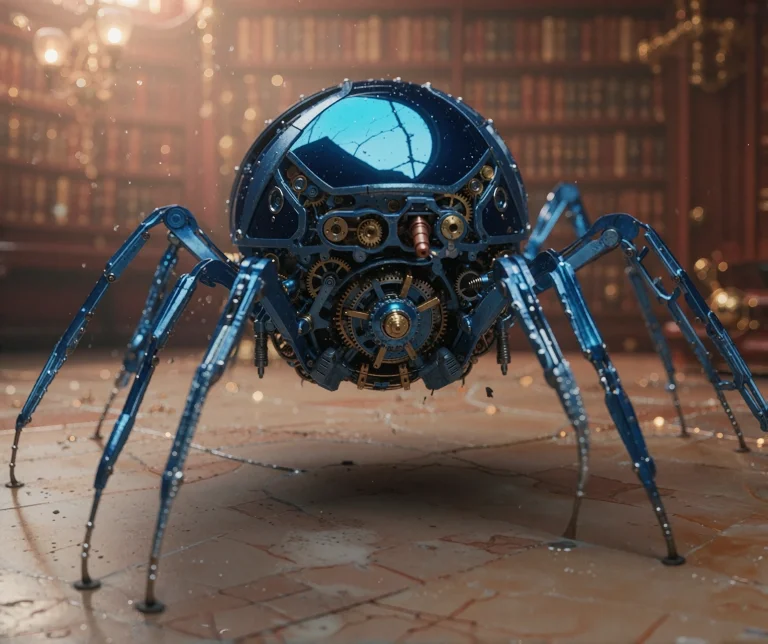
, real_surface, A small, entirely artificial mechanical library crawler with a sleek dark blue-metal body and eight articulated mechanical legs stands prominently against a warm, hazy, sunlit library background. Its compact rounded chassis combines polished sapphire blue armor and internal frame with exposed brass and copper gears, precision-machined joints, pistons, and fine mechanical details. A clearly visible miniature brass and machined blue-metal power take-off (PTO), featuring a blue-metal circular drive housing and brass central coupling shaft, is mounted at the front of the machine. The design blends streamlined futuristic robotics with restrained Victorian steampunk influences, creating a functional, believable engineered device rather than a biological spider. Soft sunlight enters through a window, producing warm highlights on the brass and cool reflections across the royal blue metal while casting gentle shadows onto the library floor. The centered macro-photographic composition emphasizes the PTO, intricate mechanical construction, and realistic materials within a serene, atmospheric environment. Style: (The design combines advanced futuristic robotics with subtle Victorian steampunk influences: warm brass fittings, fine gearwork, riveted panels, delicate copper conduits, and clockwork detailing integrated into a streamlined high-tech construction. It should feel like a practical little machine used to maintain and power a fantastical library, not an animal or toy. style emphasis: Photographic realism, presented as a high-end macro photograph of a miniature futuristic mechanical device. Extremely realistic metal surfaces, with fine machining marks, subtle scratches, tiny fasteners, seams, engraved details, exposed gear teeth, and believable wear. Polished blue enamel and brushed steel show physically accurate reflections, while the brass components have warm metallic highlights and slight patina. Use a professional macro lens, shallow depth of field, precise focus on the front-mounted brass PTO and nearby mechanical details, and smooth natural background bokeh. The image should have realistic optical characteristics, including gentle lens falloff, subtle specular highlights, natural shadow gradients, accurate reflections, and physically plausible ambient occlusion. Warm directional light and soft reflected light illuminate the machine against a dim, atmospheric library environment. The result should look like a real miniature engineered object photographed in-camera, not a digital painting, 3D render, illustration, or concept-art image. (subject: A small autonomous mechanical library crawler, an entirely artificial spider-inspired machine with no organic or biological features. It has a compact rounded central body and eight slender articulated mechanical legs with each leg ending in a little rubber slipper, built from polished blue metallic plates and segmented structural components. The blue exoskeleton and internal chassis is sleek, futuristic, and carefully engineered, with exposed brass-colored gears, pistons, bearings, sensor components, and mechanical joints visible beneath the armor. At the front center of the machine is a clearly visible miniature blue-metal and brass power take-off (PTO): a small round blue-metal drive unit with a toothed rim, central brass rotating shaft, and mechanical coupling interface, designed to connect to and power library equipment. The PTO must be prominent, functional-looking, and unmistakably part of the front assembly rather than a decorative button.) Action: (The mechanical spider stands upright on its eight legs, positioned centrally and facing forward, with its legs splayed out with rubber slippers gripping the ground for stability.) Environment: (A dim, atmospheric library interior with warm brown, amber, and muted copper tones. Tall shelves and architectural details recede softly into the background, creating depth without distracting from the subject. Dust motes drift through the air in the warm window light, adding a quiet sense of stillness. The mechanical crawler rests on a smooth, subtly reflective library floor that captures a faint, natural reflection of its blue metal body and legs. The setting should feel believable and slightly old-world, providing a restrained Victorian backdrop for the machine’s futuristic design.) Camera: A close macro-photographic shot from a low frontal angle, positioned slightly below the machine’s central body and aimed directly at its front. Use centered, symmetrical framing with the miniature brass PTO and surrounding mechanical details as the primary focal point. Keep the perspective natural and realistic, with only subtle lens distortion; avoid making the small machine appear oversized or menacing. Use a shallow depth of field to keep the front assembly sharply focused while gently blurring the warm-toned library shelves and background. Lighting: Warm, natural-looking window light enters from the upper left, softly illuminating the machine from above and slightly behind. The light produces controlled highlights across the blue metal body and gentle golden reflections on the brass gears, joints, and front-mounted PTO. Use realistic reflective behavior rather than exaggerated shine, with soft contact shadows beneath the body and legs and subtle occlusion around the mechanical components. The background remains dim and amber-toned, with a mild atmospheric haze and faintly visible dust motes that enhance depth without obscuring the library setting. The lighting should reveal fine machining, surface texture, and material differences while maintaining the appearance of an authentic macro photograph. Objects: Soft, out-of-focus library lights and sunlit dust motes create subtle glowing highlights in the warm background without becoming distracting or overly surreal. The mechanical crawler stands on a smooth, lightly reflective floor that captures a faint, natural reflection of its blue legs and rounded body, along with a soft contact shadow beneath it. The scene emphasizes realistic polished and brushed metal, exposed brass mechanisms, and precise mechanical construction, combining futuristic engineering with restrained Victorian steampunk detail rather than a cyberpunk or biomechanical aesthetic.